
Understanding PRINCE2 Methodology
The PRINCE2 methodology, known as PRojects IN Controlled Environments, is a well-established project management framework renowned for its effectiveness in managing any type or size of project. The framework is particularly valuable because it emphasizes continuous improvement, a crucial component for success in the modern, rapidly evolving business landscape.
Principles of PRINCE2
At the heart of PRINCE2 are its guiding principles, which serve as the foundation for managing projects in an orderly fashion. These principles are designed to ensure projects are controlled in a way that meets business objectives while efficiently managing risks and resources. The principles of PRINCE2 are:
– Continued business justification: This involves ensuring that there is a valid reason for the project at every stage of its lifecycle, thereby aligning with overarching business goals.
– Defined roles and responsibilities: Each project participant’s responsibilities are clearly outlined, promoting accountability and effective collaboration.
– Manage by stages: Projects are divided into manageable segments, allowing for incremental evaluation and control.
– Manage by exception: This principle focuses on defining clear limits of tolerance for each project aspect, only raising issues when these limits are exceeded.
– Focus on products: The methodology emphasizes what the project must deliver, thereby ensuring quality output and meeting client expectations.
– Tailor to suit the project environment: PRINCE2 can be scaled and tailored to the specific characteristics of the project, making it adaptable to different business settings.
– Learn from experience: Continuous learning is encouraged, using past experiences as a reference to improve future project efficiency.
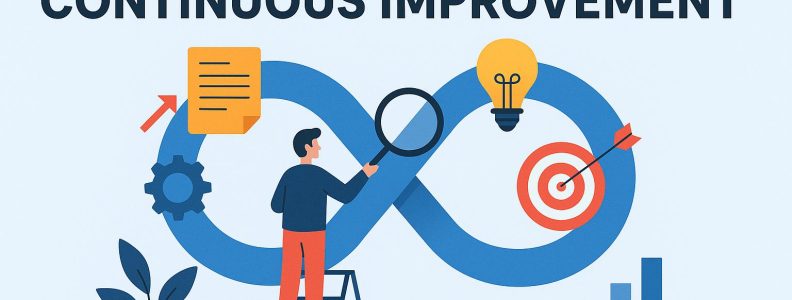
These principles collectively encourage continuous improvement by ensuring that projects are subject to constant evaluation and refinement.
The Role of Learning in PRINCE2
Central to PRINCE2 is the principle of learning from experience. This is pivotal for fostering an environment of continuous improvement. Documenting lessons learned throughout the project lifecycle helps organizations avoid previous mistakes and capitalize on successes. These lessons are captured in essential PRINCE2 documents such as the Lessons Log, End Stage Reports, and End Project Reports. By maintaining these records, organizations create a valuable repository of insights that feed into refining project processes and enhancing outcomes in future endeavors.
Continuous Improvement through Post-Project Review
A distinctive feature of the PRINCE2 methodology is its emphasis on conducting a thorough post-project review after the project’s conclusion. This review serves an evaluative function, scrutinizing performance to pinpoint what was successful and what areas require improvement. The insights gained inform updates to organizational standards and methodologies, ensuring that these refinements benefit all subsequent projects. By integrating these lessons into the organization’s broader knowledge base, PRINCE2 effectively ensures that identified improvements are not merely acknowledged but are also systematically implemented.
PRINCE2 in Practice
Successfully implementing PRINCE2 requires integrating its principles within existing business processes. While PRINCE2 provides a structured project management approach, its strength lies in its flexibility and adaptability. This adaptability means it can be customized to meet the distinct requirements of various projects and organizational settings, further bolstering the pursuit of continuous improvement.
Organizations that have effectively adopted PRINCE2 have not only enhanced their project management capabilities but also instilled a culture of continuous learning and adaptation. The methodology’s structured yet flexible nature facilitates this by allowing organizations to tailor it to their specific needs and cultivate improvement-focused project environments.
In conclusion, PRINCE2’s framework facilitates not just successful project completion but also imbues a culture of continuous improvement throughout the organization. By placing a strong emphasis on learning from previous experiences and adapting processes accordingly, PRINCE2 empowers organizations to better their project management practices, ultimately yielding superior business results. For more nuanced understanding of tailoring PRINCE2 to various contexts, visiting the AXELOS Official Website is recommended.