
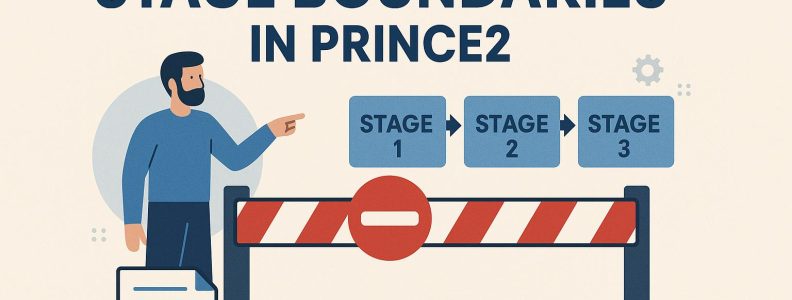
Understanding Stage Boundaries in PRINCE2
In the realm of project management, where structure and foresight are paramount, the PRINCE2 methodology stands out for its systematic approach to managing projects. Central to this methodology are stage boundaries, which hold considerable significance. These boundaries are pivotal for breaking down a project into manageable sections, each with defined objectives and deliverables. By segmenting the project flow, stage boundaries enable better control, ensure diligent governance, and facilitate timely decision-making processes.
The Role of Stage Boundaries
The PRINCE2 framework is lauded for its structured processes and defined phases. Within this framework, projects are methodically divided into distinct stages. Each stage concludes at what is termed a *stage boundary*. This division is not just a mere segmentation of work but a critical juncture that serves multiple purposes. The primary objectives of stage boundaries are to evaluate the project’s progress, make informed decisions regarding the project’s continuation, and meticulously plan for the subsequent stage. Through this systematic evaluation, the PRINCE2 methodology ensures that every phase of the project is executed with precision and remains aligned with the overarching project plan.
Re-assessment and Control
A vital function of stage boundaries within the PRINCE2 framework is their role in facilitating periodic review and re-evaluation. At each stage boundary, there is an opportunity for the project board to scrutinize the current status against the initial plans and objectives. This review process is not only about tallying completed tasks but also about making any necessary adjustments to guarantee that the project is on the right path. The insights gained during such reviews provide the control needed to manage resources in an efficient manner and to mitigate risks that could potentially derail the project. Thus, stage boundaries act as strategic checkpoints where realignment with project goals can be achieved, ensuring that deviations are promptly rectified and project outcomes remain predictable.
Planning the Next Stage
As a project advances and crosses a stage boundary, the necessity to plan the upcoming stage becomes paramount. In PRINCE2, each stage boundary is seen as an opportunity to cast a forward-looking perspective. Detailed planning at this juncture is crucial; it involves negotiating timelines, setting clear expectations, and ensuring appropriate allocation of resources. Such planning is instrumental in laying down a robust foundation for the ensuing phase, thus facilitating a seamless transition between stages. By having this clarity and foresight, teams can enhance their *efficiency* and significantly reduce the chances of encountering delays or unforeseen obstacles. Effectively, the planning process at each stage boundary is what stitches the different phases together, ensuring that the project advances like a well-oiled machine.
Decision-Making and Governance
In addition to their role in planning and control, stage boundaries are pivotal in project governance. They are critical decision points at which the project board determines whether or not to proceed with the project. This determination hinges on an in-depth evaluation of several key factors: the validity of the business case, adherence to budget constraints, the achievability of anticipated benefits, and an assessment of potential risks. These evaluations are exhaustive, requiring comprehensive analyses to ensure informed decision-making. If these criteria fail to be met, the project board faces the critical decision of either implementing necessary changes or, in some cases, terminating the project altogether. Thus, stage boundaries reinforce a governance model that prioritizes judicious decision-making and ensures that projects deliver real value to the organization.
To summarize, stage boundaries are a cornerstone of the PRINCE2 methodology, offering a structured approach that enhances the efficacy and predictability of project management. By acting as points for evaluation and control, they ensure continued alignment with strategic objectives and the judicious use of resources. Through these boundaries, PRINCE2 projects benefit from a clear framework of control, facilitating both continuity and adaptability in achieving project goals. For those interested in delving deeper into the nuances of stage boundaries and the broader PRINCE2 methodology, further exploration can be made through the official PRINCE2 resources.